Case Study
SoilCheck
A local-first PWA that tells you which pots need checking today
Status
Live · soilcheck.app
Storage
IndexedDB · Offline
Weather
NWS · No API key
React · TypeScript · Dexie · Vite PWA · Cloudflare Pages
Problem
Watering schedules don't survive contact with a real garden. A terracotta pot in July and a self-watering planter in October dry out on completely different clocks, and a fixed "every three days" reminder is wrong for both.
What Was Built
An installable offline PWA that models how fast each pot dries — from the plant, the container, and the weather — and sorts the whole garden by urgency so the answer is the first thing on screen.
Outcome
A morning check that takes seconds on a phone in bright sun, with no account, no sync, and no subscription. Everything lives on the device.
Background
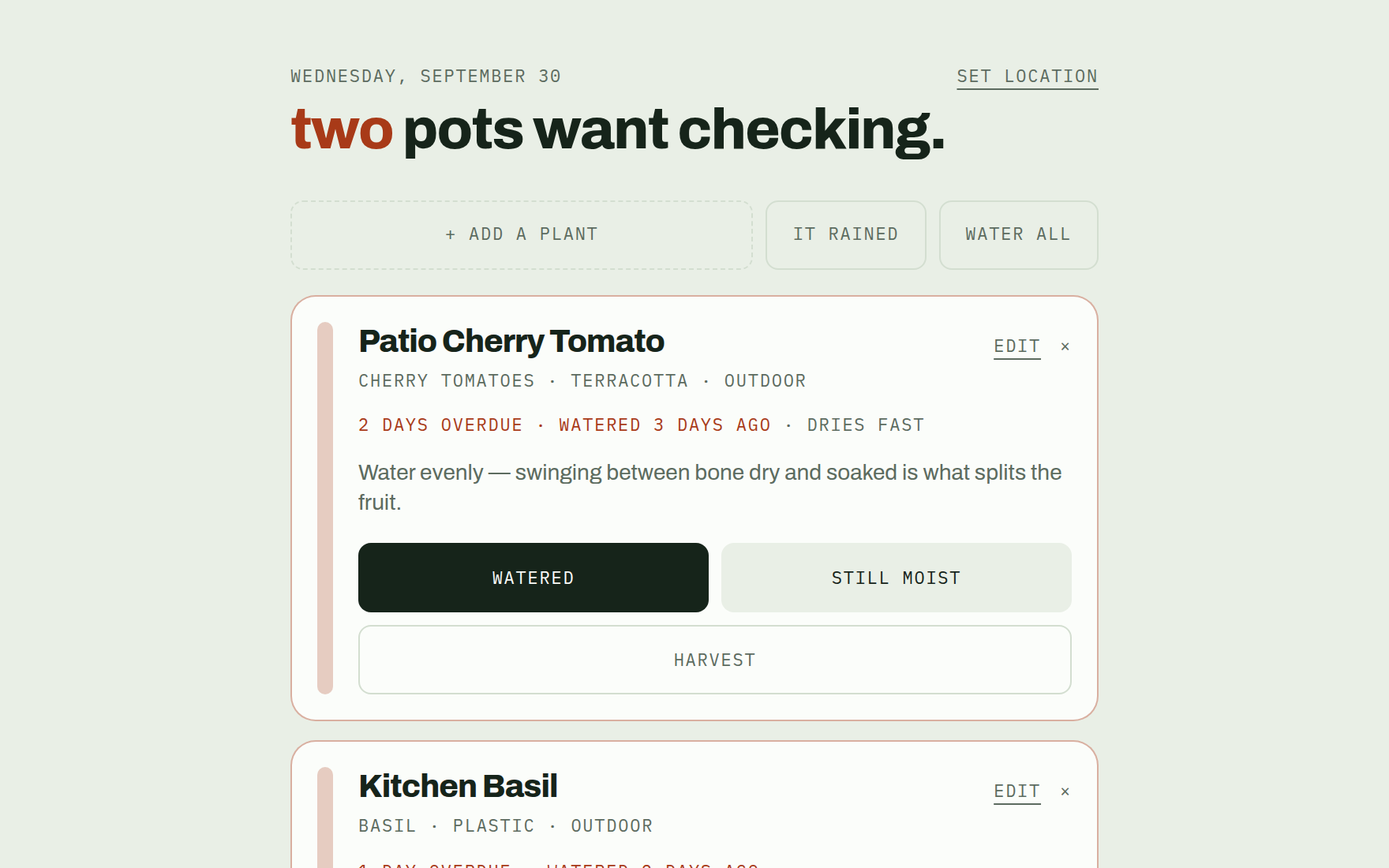
SoilCheck answers one question each morning: which pots need checking today? You add your plants once — what they are, what they're growing in, indoor or out — and the app works out the rest.
It's designed to be read on a phone, on the patio, in bright sun, with dirty hands. That constraint drove almost every decision.
The Model
Each plant gets a drying interval:
interval      = baseDryingDays × containerMultiplier × weatherFactor
nextCheckDate = max(lastWatered, lastChecked) + interval
urgency       = (now − lastEvent) / interval
Terracotta breathes, so it dries at 0.7×. A hanging basket loses water on every side at 0.5×. A self-watering pot holds out at 2.0×.
Urgency is a fraction of the interval, not days overdue. A basil two days late is a genuine emergency; a snake plant two days late is not. Cards sort by that fraction, and a moisture column down each card's edge draws it directly — full after watering, draining as the soil dries, rust once overdue. It reads at arm's length without parsing a number.
What I Built
- Watered vs. still moist — two deliberately different actions. Both reset the schedule, but only one claims you watered, so the history stays honest.
- Rain prompts — the app checks National Weather Service observations near your ZIP and asks whether your pots got wet. It never decides on its own.
- Temperature adjustment — hot weather ahead shortens outdoor intervals and a cool spell lengthens them, averaged over three days of forecast highs so one hot afternoon doesn't whipsaw the garden.
- Installable and offline — a PWA with an app-icon badge showing how many pots are due, plus export/import backups.
Key Technical Decision
Ask about rain instead of acting on it. NWS precipitation data is sparse — stations report rain when it falls and omit the field otherwise. Across five stations near Wilmington, NC, nearby stations disagreed on rainfall amounts by up to 3×, while agreeing on whether it rained. That's fatal for an automatic adjustment and fine for a prompt a human confirms. Temperature, which every station reports on every observation, is the one input the app trusts without asking.
Stack
React + TypeScript · Vite · Tailwind CSS · Dexie (IndexedDB) · Vitest · Cloudflare Pages
Visit SoilCheck →